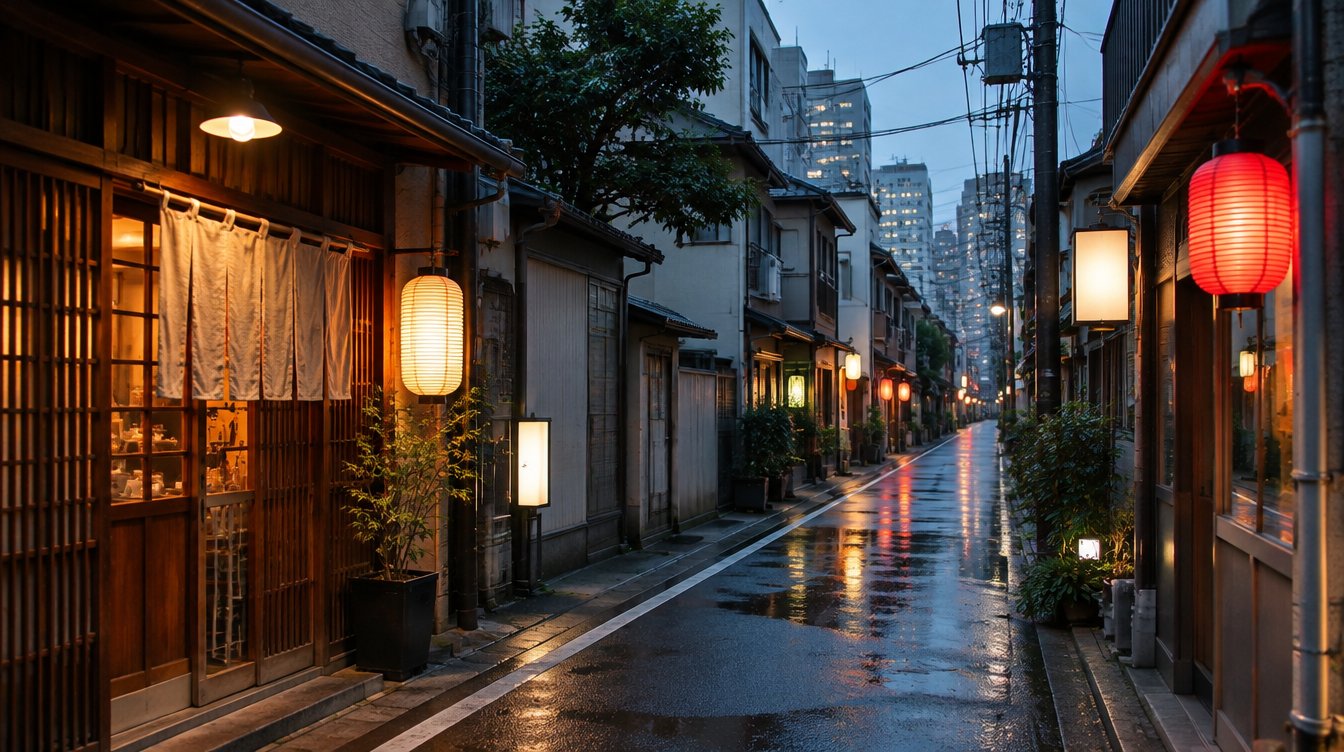
Shinjuku, Shibuya, Asakusa or Ginza: which one suits you, how to get there from Haneda and Narita, where to eat, and a three-day plan.
Images in this guide are AI-generated illustrations.
This guide contains affiliate links. If you book through them, Journi earns a commission at no extra cost to you.
Updated 18 November 2026
In this guide: Quick comparison · Practical basics · Shinjuku · Shibuya · Asakusa · Ginza · Where to eat · Things to do · Day trip: Hakone · Three days in Tokyo · Booking timing · Common mistakes · Book your trip · Planning this trip for real? · Sources
Tokyo is the most-searched destination worldwide, according to Amadeus' November 2026 report (company-reported). It is also huge, and the area you book decides how the trip feels: how far you walk to a station, what is open at 11pm, and how long the airport train takes.
This guide covers four areas that suit a first visit. Pick the one that matches how you like to spend an evening, book a hotel within a few minutes of a station, and the rest of Tokyo is one train away.
Quick comparison
| Area | Best for | Haneda by train | Hotels to start with |
|---|---|---|---|
| Shinjuku | Food, nightlife, easy trains | About 50 min | Hotel Gracery Shinjuku · Hilton Tokyo |
| Shibuya | Shopping, views, fashion | About 45 min | Cerulean Tower Tokyu Hotel · Shibuya Excel Hotel Tokyu |
| Asakusa | Temples, river, old Tokyo | About 40 min | Hotel Gracery Asakusa · Ryokan Asakusa Shigetsu · Asakusa View Hotel |
| Ginza | Dining, department stores, central | About 50 min (35 by limousine bus) | Hotel Gracery Ginza · Imperial Hotel Tokyo |
Practical basics
When to go. GO TOKYO, the city's official tourist guide, says most of December stays autumnal, the real cold arrives in January, and temperatures tend to sit between 1 and 10 degrees, rarely dropping below 0. Snow is possible. Twilight comes around 16:30, so plan outdoor sights for the morning and early afternoon. Tokyo is nine hours ahead of GMT and does not change its clocks.
Flights. Tokyo has two main airports, Haneda and Narita, and many carriers fly into both. As one example, British Airways says its Heathrow to Haneda service runs twice daily through the winter 2026 schedule (announced 16 March 2026, subject to scheduling and slot constraints).
Haneda or Narita. Haneda is the closer airport. By Haneda's own figures, Shinagawa is about 15 minutes away, Tokyo Station about 30, Shibuya about 45, Shinjuku about 50 and Asakusa about 40 by train or monorail. Narita is further out: GO TOKYO gives about one hour 35 minutes by train to Shinjuku, one hour 40 to Shibuya, one hour 25 to Asakusa and one hour 35 to Ginza.
From Narita. Keisei's Skyliner reaches Ueno in as little as 36 minutes, and JR's Narita Express (N'EX) takes as little as 53 minutes to Tokyo Station. JR East sells an N'EX TOKYO round-trip ticket for 5,200 yen, valid for 14 days, collected at Narita's JR EAST Travel Service Centres or ticket machines. From Haneda, the Tokyo Monorail from Terminal 1 to Hamamatsucho is 520 yen for an adult.
Getting around. The Tokyo Subway Ticket gives unlimited rides on all Tokyo Metro and Toei Subway lines for 24 hours (1,000 yen), 48 hours (1,500 yen) or 72 hours (2,000 yen) from first use. It is sold online to overseas visitors. A Welcome Suica card from JR East is e-money for temporary visitors, valid for 28 days from purchase with no deposit. A standard Suica needs a 500-yen deposit and tops up with cash only. Shinjuku Gyoen even takes an IC card at its gates.
Tip: Book the area first, then look at which airport your flight uses. If you land at Narita, Asakusa and Ueno are the shortest hops. If you land at Haneda, all four areas are under an hour.
01. Shinjuku
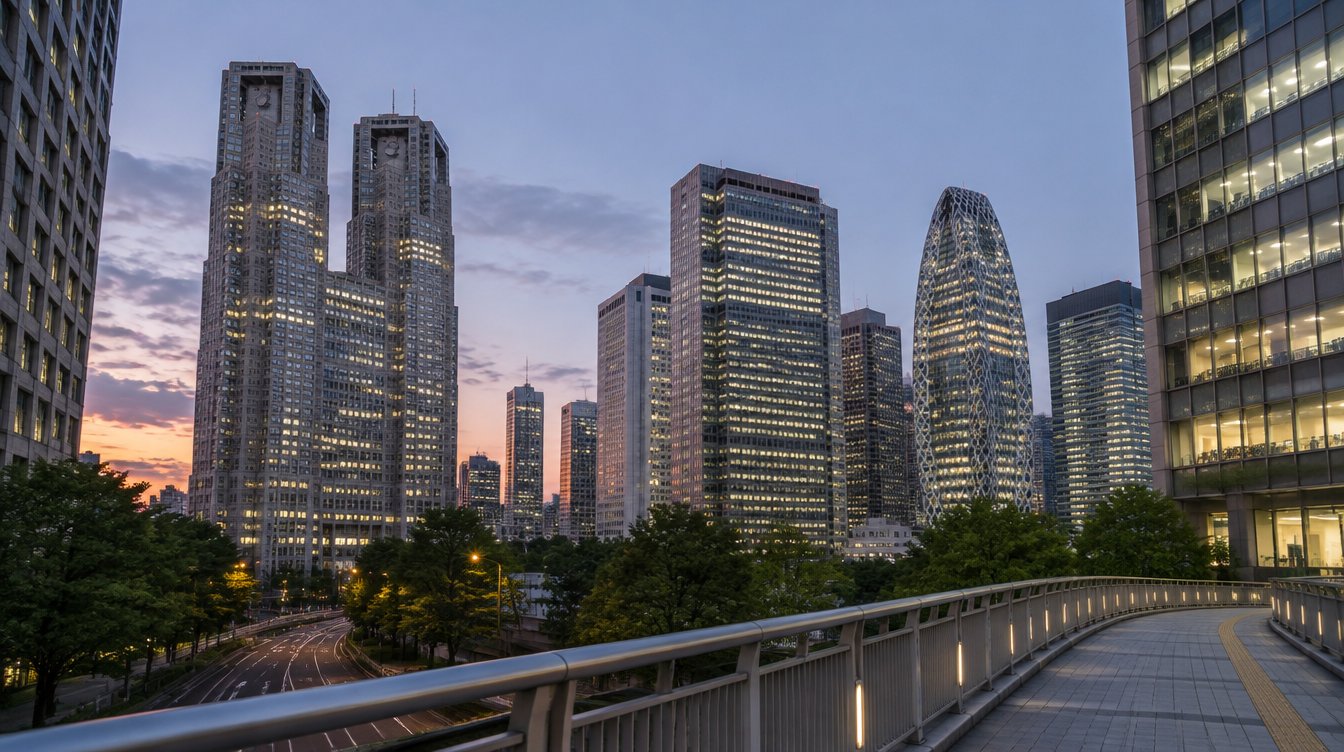
Who it suits: First-timers who want food, bars and trains in one place, and don't mind a busy station.
Area to book: East of the station, near Kabukicho, for dining and nightlife. West of the station, Nishi-Shinjuku, is quieter, full of skyscrapers and close to the Tokyo Metropolitan Government Building.
Shinjuku Station is on all the JR lines, the Keio and Odakyu lines and several subway lines, so most of Tokyo is one change away. By day there are department stores, electronics shops and the observation decks of the Tokyo Metropolitan Government Building. At night the east side fills with ramen stands, izakaya and the tiny bars of Kabukicho.
Worth knowing: Public transport runs until around midnight, but Shinjuku stays busy after that. Ask for a room away from the street if you sleep lightly.
From the airport: Haneda is about 50 minutes by train. From Narita, GO TOKYO gives one hour 35 minutes by train or about two hours by limousine bus.
Where to stay
- Hotel Gracery Shinjuku (east side, nightlife): 970 rooms in the Shinjuku Toho Building in Kabukicho, 5 minutes' walk from JR Shinjuku Station East Exit and 3 minutes from Seibu Shinjuku Station. All rooms have a separate bath and toilet.
- Hilton Tokyo (west side, families): in Nishi-Shinjuku, with an indoor pool, spa and connecting rooms. Children aged 6 and over pay adult rates, and under-6s stay free sharing a bed with a parent. The hotel has no airport shuttle, so plan the train or bus.
- More Shinjuku hotels on Booking.com
02. Shibuya
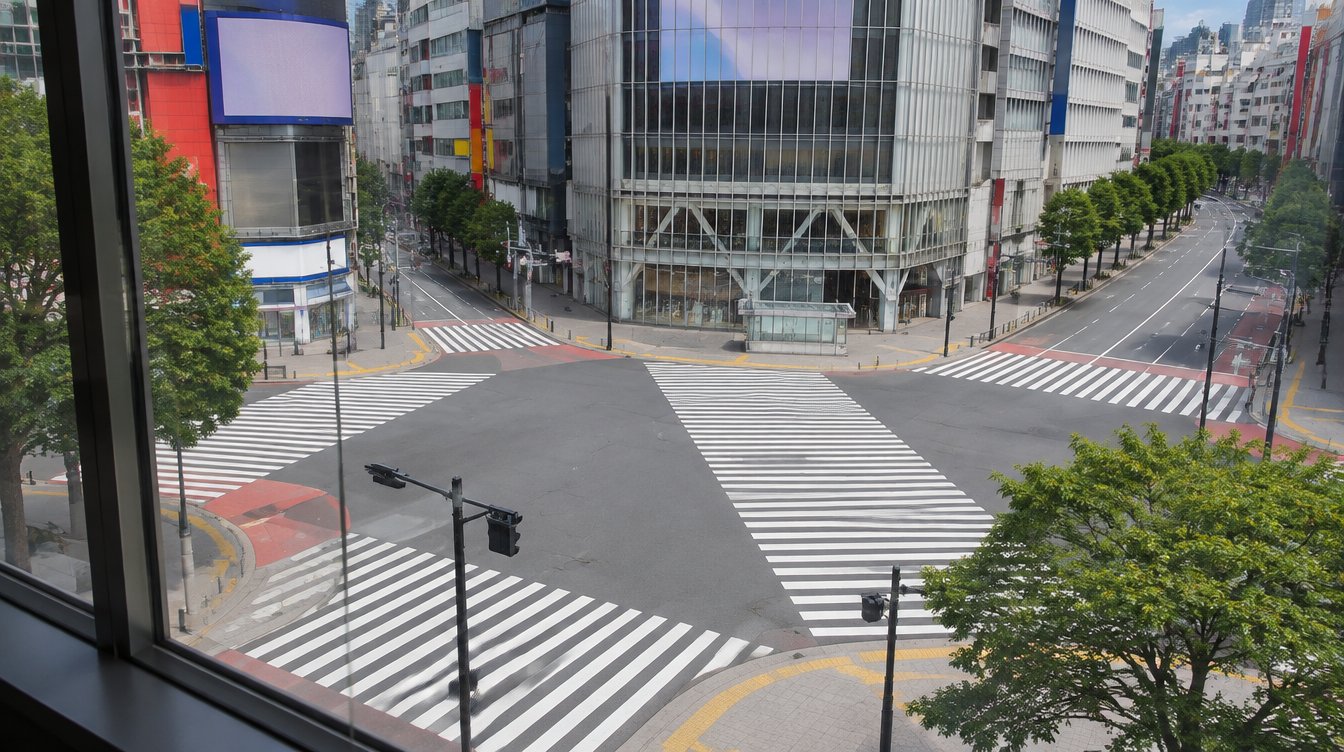
Who it suits: Shoppers, first-timers who want the famous crossing, and anyone who likes a view from the room.
Area to book: Around the station, or Sakuragaoka on the west side, for a short walk to the trains.
Shibuya is where Tokyo's fashion and youth culture sit. The Scramble Crossing floods every couple of minutes, Shibuya Parco and Shibuya Hikarie handle the shopping, and the SHIBUYA SKY deck at Shibuya Scramble Square looks out from about 230 metres. Harajuku, Omotesando and Daikanyama are a 15 to 20 minute walk.
Worth knowing: Shibuya Station is a maze of exits. Pick a hotel near the exit you will use most, or choose one connected to the station.
From the airport: Haneda is about 45 minutes by train. From Narita, GO TOKYO gives one hour 40 minutes by train. From Shinjuku it is 7 minutes on the JR Yamanote Line.
Where to stay
- Cerulean Tower Tokyu Hotel (views): 5 minutes on foot from JR Shibuya Station West Exit. Every room is on the 19th floor or above, and the hotel lists twin rooms, suites and a Japanese-style suite for one to four people. On clear days, Mount Fuji is visible from west-facing rooms.
- Shibuya Excel Hotel Tokyu (station access): directly connected to Shibuya Station inside Shibuya Mark City, with a restaurant about 100 metres above ground. A guest-only lounge was announced on 16 November 2026.
- More Shibuya hotels on Booking.com
03. Asakusa
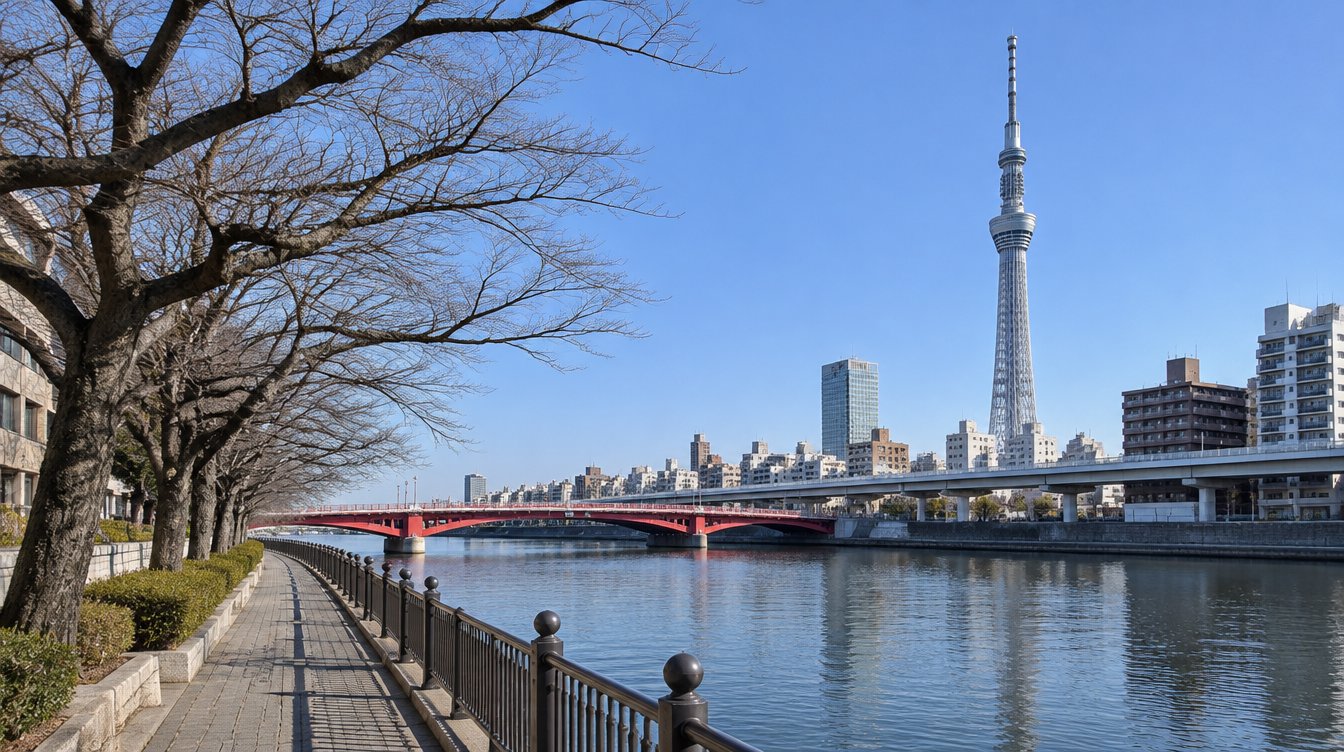
Who it suits: Travellers who want temples, old streets and the river, and a calmer base than Shinjuku or Shibuya.
Area to book: Near Asakusa Station (Ginza Line, Toei Asakusa Line) or Kaminarimon.
Asakusa is built around Senso-ji, which its own site calls the oldest temple in Tokyo. You walk through Kaminarimon, the Thunder Gate, down the Nakamise shopping street to the main hall. The Sumida River is a few minutes away, with views of Tokyo Skytree and a waterbus from a pier three minutes from Asakusa Station. Kappabashi Kitchenware Town and the restaurants of Rokku Broadway are close by.
Worth knowing: Asakusa is further from Shinjuku and Shibuya. GO TOKYO gives 35 minutes from Shinjuku (changing at Kanda) and 20 minutes from Tokyo Station, so plan evenings out with that in mind.
From the airport: Haneda is about 40 minutes by train. From Narita, GO TOKYO gives one hour 25 minutes by train.
Where to stay
- Hotel Gracery Asakusa (simple, central): 125 rooms, 3 minutes on foot from Asakusa Station Exit A4 or A1 on the Toei Asakusa Line and 5 minutes from Exit 2 on the Ginza Line. It has a twin room and a restaurant.
- Ryokan Asakusa Shigetsu (traditional): a Japanese-style ryokan one minute's walk from Nakamise-dori and five from Senso-ji, with two adjoining Japanese suites that sleep up to four. Its sixth-floor cypress bath looks out to Skytree and the pagoda, and the hotel's site says that bath closes for renovation from mid-January to early February.
- Asakusa View Hotel (views): a city hotel near Tawaramachi with a 28th-floor bar and Skytree-view dining, and an annex, Asakusa View Annex Rokku, one minute's walk away.
- More Asakusa hotels on Booking.com
04. Ginza
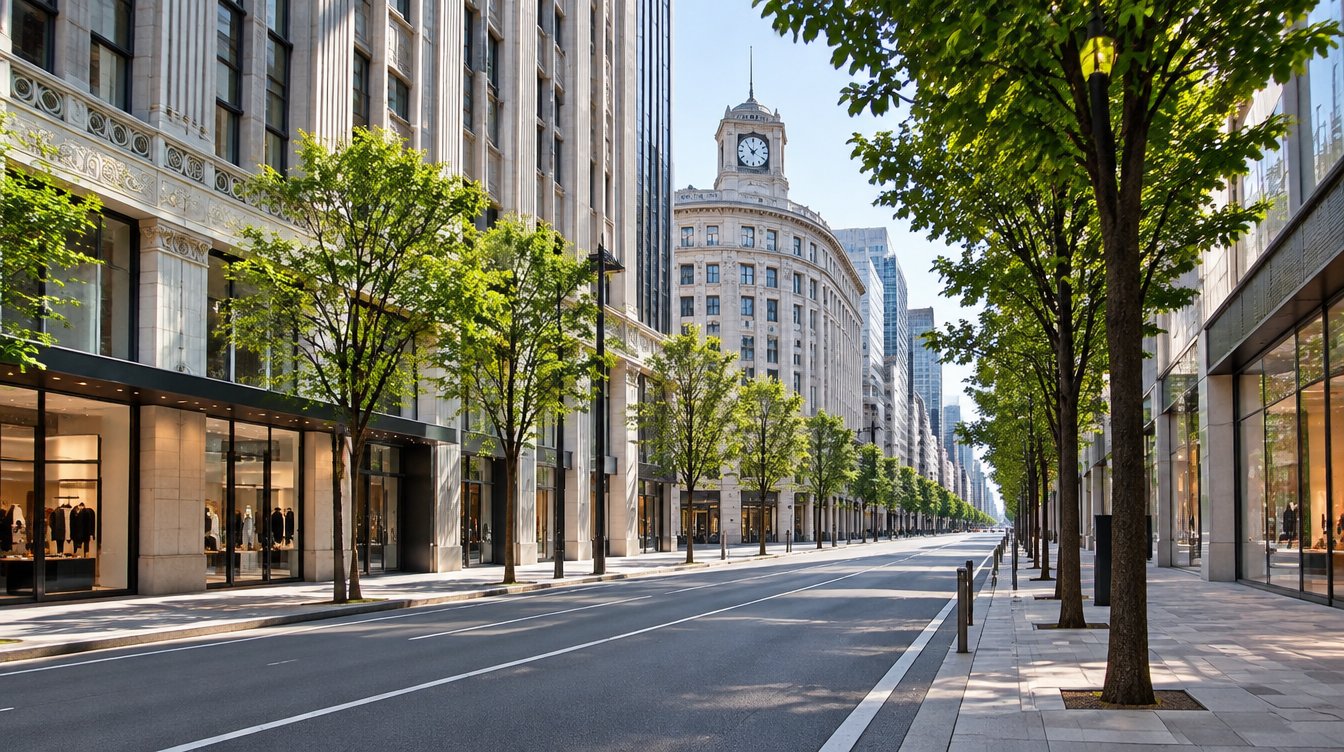
Who it suits: Travellers who want restaurants, department stores and a central base, and who plan to see several areas by subway.
Area to book: Around Ginza Station (Ginza, Marunouchi and Hibiya lines) or Higashi-Ginza.
Ginza has Tokyo's long-established department stores, newer complexes such as GINZA SIX, galleries and the Kabukiza kabuki theatre. Tokyo Station is 3 minutes away on the Marunouchi Line, and Shinjuku is 16.
Worth knowing: On weekends and national holidays the main street closes to traffic and becomes a pedestrian zone, from noon to 5pm from October to March (noon to 6pm from April to September).
From the airport: Haneda is about 50 minutes by train or 35 minutes by limousine bus. From Narita, GO TOKYO gives one hour 35 minutes by train or about two hours by limousine bus.
Where to stay
- Hotel Gracery Ginza (simple, central): 270 rooms, a 3-minute walk from Ginza Station on the Ginza Line and 8 minutes from JR Shimbashi Station, with a restaurant and breakfast.
- Imperial Hotel Tokyo (classic, families): 3 minutes on foot from Hibiya Station (exit A13) and 5 minutes from JR Yurakucho. The hotel lists family connecting rooms, and a pool and sauna on the 20th floor of the Tower Building.
- More Ginza hotels on Booking.com
Where to eat
Shinjuku has a district of ramen stands north of the station, known as Ramen Gekisenku, plus the izakaya of Kabukicho and the tight lanes of Omoide Yokocho and Golden Gai. The department stores around Shinjuku Station, including Isetan, Keio, Odakyu and Takashimaya, have food floors in their basements. In Shibuya, MIYASHITA PARK and Shibuya Yokocho gather sushi, ramen, gyoza and yakitori under one roof. Asakusa's Rokku Broadway, a 300-metre street, has Edo-style sushi and other restaurants.
In Ginza, GO TOKYO notes that some Michelin-starred sushi restaurants are small, counter-only and need reservations, so book those before you fly. It also names Ginza Hachigo for Michelin-starred ramen and Makiyaki Ginza Onodera for French cooking from a wood-fired oven. The Tsukiji outer market, about a 10-minute walk from Ginza, keeps around 60 shops in Tsukiji Uogashi even though the inner market moved to Toyosu.
Things to do
- Senso-ji and Nakamise (Asakusa): the oldest temple in Tokyo, reached through Kaminarimon. The year-end Hagoita Market, a market of decorated hagoita paddles with about 360 years of history, runs 17 to 19 December 2026, and hatsumode, the first visit of the year, runs 1 to 7 January. Asakusa and Senso-ji walking tours on GetYourGuide
- Shinjuku Gyoen: open 9:00 to 16:30 from 1 October to 14 March, last entry 16:00, closed Mondays (the next weekday if Monday is a public holiday) and from 29 December to 3 January. Adult entry is 500 yen. The garden is open daily during the chrysanthemum exhibition, 1 to 15 November. Alcohol is not allowed inside.
- Meiji Jingu (Harajuku): a shrine set in a forest of about 70 hectares in the middle of the city. Entry is free, it is open daily, opening hours change with the season, and it is one minute on foot from Harajuku Station.
- SHIBUYA SKY: the observation deck at Shibuya Scramble Square, about 230 metres up and directly connected to Shibuya Station. Open 10:00 to 22:30, last admission 21:20, closed on New Year's Day. Adult tickets booked online are 2,700 yen before 15:00 and 3,400 yen from 15:00, and the counter charges 300 yen more. Children under 5 are free, and the deck can close in bad weather. Tours that include Shibuya Sky on GetYourGuide
- Tokyo Metropolitan Government Building (Shinjuku): free observation decks, open 9:30 to 22:00 with last entry 30 minutes before closing. The South Observatory is closed on the first and third Tuesday of the month and the North on the second and fourth Monday, and both close over the New Year holidays.
- Tokyo Skytree: the Tembo Deck at 350 metres is 1,800 yen for adults and the Floor 350 and 450 combo is 3,000 yen. Buy online, as tickets bought at the counter carry a 500-yen service fee per ticket. Tokyo Skytree tickets on GetYourGuide
- Sumida River waterbus (Asakusa): the Hotaluna boat runs to Hinode Pier, Odaiba Marine Park and Toyosu. As of February 2026, the Hama-rikyu Gardens stop is for getting off only. Sumida River cruises on GetYourGuide
Day trip: Hakone
Hakone is the hot-spring area west of Tokyo, and Expedia's winter outlook reports Hakone searches up 40% year on year (company-reported, 13 November 2026). The simplest route starts at Shinjuku. Odakyu's Hakone Freepass from Shinjuku is 7,100 yen for an adult for two days (7,500 yen for three) and includes the return trip between Shinjuku and Odawara. It also covers the Hakone Tozan train and bus, the cable car, the ropeway and the Lake Ashi sightseeing cruise. The Romancecar limited express is a separate seat ticket of 1,200 yen each way to Hakone-Yumoto, which makes 9,500 yen in total for the pass plus a return Romancecar trip. Odakyu sells the pass online as a QR code for your phone.
Worth knowing: Hakone suits an overnight stay better than a rushed day. Odakyu's sample two-day plan covers Hakone Shrine and its torii gate on Lake Ashi, then the roughly 30-minute cruise from Moto-Hakone to Togendai.
Three days in Tokyo
Day 1: Asakusa and the river. Walk through Kaminarimon and along Nakamise to Senso-ji. Browse Kappabashi Kitchenware Town (listed hours are 10:00 to 17:00, Monday to Saturday, and vary by shop), then take the waterbus from the pier by Asakusa Station. Finish with dinner on Rokku Broadway.
Day 2: Shibuya and Harajuku. Cross the Scramble Crossing early, then walk to Meiji Jingu and its forest. Come back for SHIBUYA SKY, where tickets are cheaper before 15:00. Eat at Shibuya Yokocho in MIYASHITA PARK.
Day 3: Shinjuku and Ginza. Take the Marunouchi Line to Shinjuku and spend the morning at Shinjuku Gyoen (not on a Monday), then go up the free Tokyo Metropolitan Government Building decks. Have ramen in Ramen Gekisenku, then ride 16 minutes on the Marunouchi Line to Ginza for the afternoon. Browse the department stores and finish with a reserved sushi counter dinner.
Tip: Swap the days around if your trip includes a Monday, because Shinjuku Gyoen is closed then. Asakusa and Shibuya are both on the Ginza Line, so Days 1 and 2 are one direct ride apart.
Booking timing
Pick your area and hotel first, then book flights around the airport that suits it. Book hotels as soon as your dates are fixed, and read the cancellation terms on the booking page before you pay. Reserve Ginza sushi counters and the Skytree online before you travel.
Common mistakes
- Booking by price alone. A cheaper hotel 20 minutes from a station costs time every day.
- Ignoring the station exit. Shinjuku and Shibuya stations are very large. Check the walk from the exit named by the hotel.
- Planning outdoor sights for the afternoon. Twilight is around 16:30 in winter.
- Scheduling Shinjuku Gyoen on a Monday. The garden is closed then, and from 29 December to 3 January.
- Buying tickets at the counter. Skytree adds a 500-yen service fee per ticket, and SHIBUYA SKY charges 300 yen more at the counter than online.
Book your trip
Where to stay
- Shinjuku: Hotel Gracery Shinjuku · Hilton Tokyo · Shinjuku hotels
- Shibuya: Cerulean Tower Tokyu Hotel · Shibuya Excel Hotel Tokyu · Shibuya hotels
- Asakusa: Hotel Gracery Asakusa · Ryokan Asakusa Shigetsu · Asakusa View Hotel · Asakusa hotels
- Ginza: Hotel Gracery Ginza · Imperial Hotel Tokyo · Ginza hotels
- Hakone (day trip or overnight): Hakone hotels
Transfers
Tours and tickets
Prices and availability change, so check the details before you pay.
This guide contains affiliate links. If you book through them, Journi earns a commission at no extra cost to you.
Planning this trip for real?
Journi is an intelligent travel platform that remembers how you travel, so you never have to repeat yourself. Tell it once, and it already knows.
Sources
- GO TOKYO: Shinjuku, Shibuya, Asakusa, Ginza, Tsukiji, Weather
- Haneda Airport, train and monorail times; Tokyo Monorail fare table
- Keisei Skyliner; JR East Narita Express
- Tokyo Subway Ticket; JR East Suica; Welcome Suica
- Shinjuku Gyoen admission; Senso-ji; Meiji Jingu; Tokyo Skytree
- GO TOKYO spot pages: SHIBUYA SKY and Tokyo Metropolitan Government Building
- Odakyu Hakone Freepass
- Sensoji Hagoita Market; Meiji Shrine
- British Airways winter 2026 announcement
- Hotels: Gracery Shinjuku, Hilton Tokyo, Cerulean Tower, Shibuya Excel, Gracery Asakusa, Ryokan Asakusa Shigetsu, Asakusa View, Gracery Ginza, Imperial Hotel Tokyo
- Amadeus, November 2026 destination report (company-reported)